
Casual Games
LinkedIn or Interpol Game Review
1370
Jan 12, 2026

Game Blog
@GamHub
Latest blog
TOKKI LIVE Controls: Quiz, Red Light Green Light and Freeze Tag Meet TOKKI LIVE: Three Rabbit Party Games in a Browser Before Installing the Cells: After Hours Alpha Cells: After Hours: What the Alpha Includes Arcade Motor Race: Feel the Adrenaline of Extreme Motorcycle Racing InstantlyOn Gamhub, we evaluate games with one core question in mind: is this game actually worth your time?
After spending multiple sessions with LinkedIn or Interpol, the answer depends heavily on what you expect from a game.
This is a title with a very sharp concept and very limited depth. It can be surprisingly engaging for a short time, but it is equally easy to see its boundaries after extended play.
Is LinkedIn or Interpol Worth Playing?
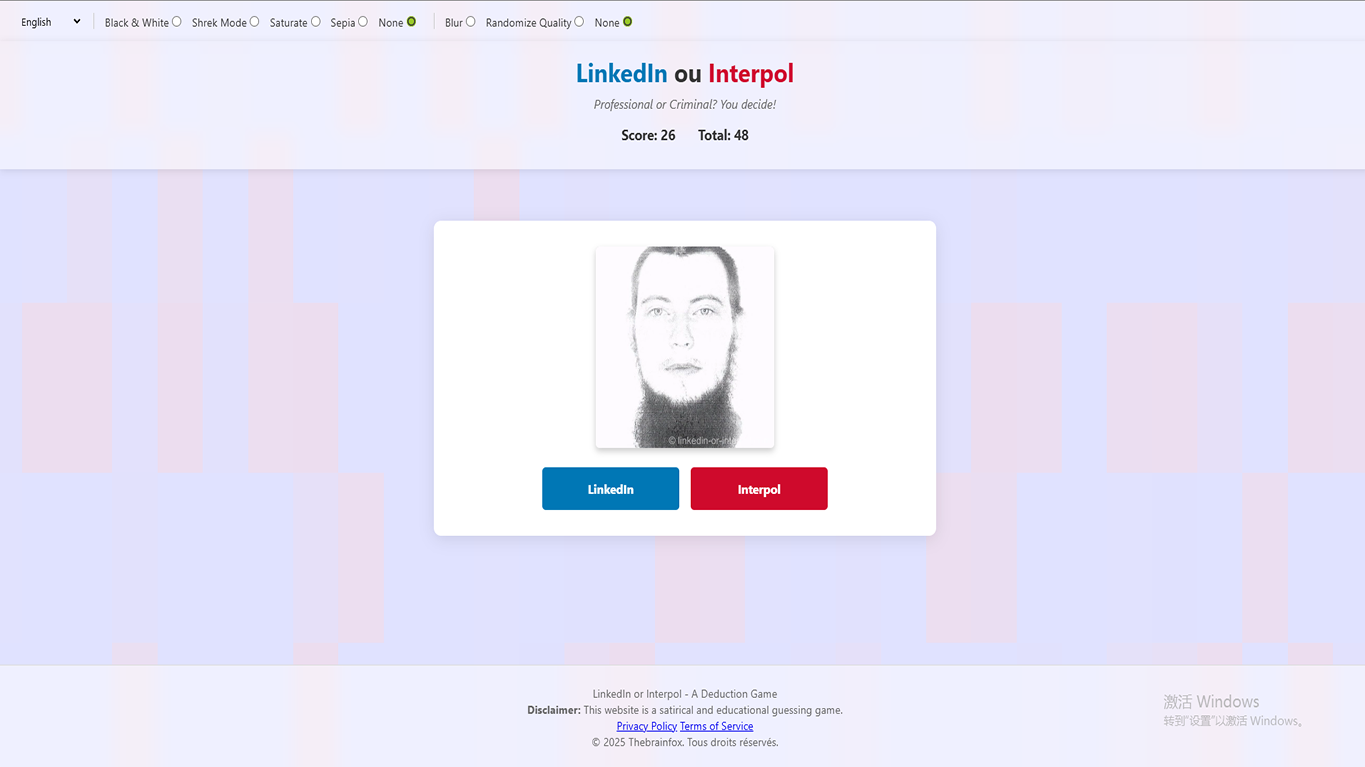
LinkedIn or Interpol is a game that delivers its entire experience within the first few minutes. The initial tension, curiosity, and discomfort are real. You hesitate before clicking. You second-guess yourself. You feel confident, then immediately proven wrong.
However, after repeated rounds, the experience changes. What starts as instinctive judgment slowly becomes mechanical recognition. Whether it is "worth playing" depends on whether you value conceptual impact over mechanical longevity.
For short, curiosity-driven sessions, it works. For long-term engagement, it does not.
What Type of Game Is LinkedIn or Interpol?
- Game Type: Casual Guessing Game
- Subgenre: Psychological / Pattern Recognition
- Player Mode: Single-player
- Platform: Web Browser
This is not a puzzle game in the traditional sense, and it is not a skill-based challenge. LinkedIn or Interpol functions more like a reaction test, asking players to rely on instinct rather than logic.
There is no progression, no unlockable content, and no score system that meaningfully evolves. The design prioritizes immediacy over depth.
Platforms, Devices, and System Requirements
- Supported Platforms: PC, Mobile, Tablet
- Operating Systems: Windows, macOS, iOS, Android
- Browser Support: Chrome, Safari, Edge, Firefox
- Installation: Not required
- Account: Not required
From a technical perspective, LinkedIn or Interpol performs exactly as expected for a browser game. On Gamhub's tests, it loaded quickly, responded instantly to input, and showed no noticeable performance issues across devices.
Accessibility is one of its strongest points.
Core Gameplay Experience in LinkedIn or Interpol
The core gameplay loop is extremely simple:
- A portrait image appears
- A name is shown
- The player chooses LinkedIn or Interpol
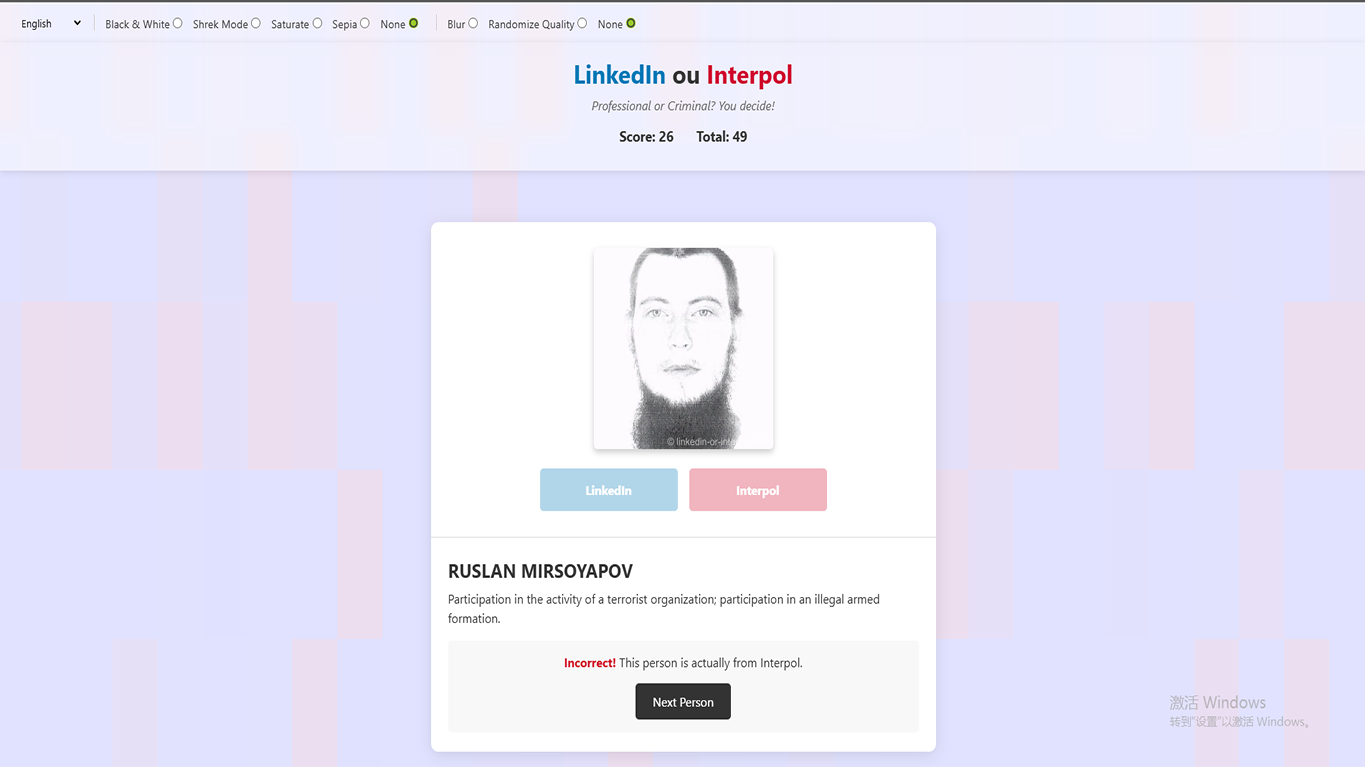
- Immediate feedback is given
There is no time pressure, but the design naturally encourages fast decisions. The game subtly pushes players to trust their first impression, even when they know that instinct is unreliable.
In early rounds, this creates tension. You pause. You scan the face. You look for clues that may not exist.
That feeling is genuine but it does not last forever.
How Players Actually Make Decisions in LinkedIn or Interpol
After multiple play sessions, decision-making becomes less emotional and more technical. Players begin to rely on recurring visual cues:
- Eye contact and facial tension
- Photo framing and background cleanliness
- Image resolution and compression
- Centered portraits versus irregular cropping
At this stage, the game shifts. It stops feeling like a psychological test and starts behaving like a pattern recognition exercise. Success becomes less about instinct and more about remembering how the game presents its images.
This transition is subtle but important, and it directly affects replay value.
Difficulty Curve and Repetition Over Time
LinkedIn or Interpol does not increase difficulty in a meaningful way. There are no new mechanics introduced, no variation in rules, and no escalation in challenge.
After enough rounds, repetition becomes noticeable:
- Similar photo styles reappear
- Visual patterns become predictable
- Correct answers feel less earned
For some players, this is where interest fades. For others, it becomes a meta-game of spotting patterns rather than judging people.
Neither approach is wrong, but it defines how long the game remains engaging.
Strengths and Weaknesses Observed During Play
What Works Well:
- Immediate accessibility with no setup
- Strong initial tension and curiosity
- Clear, focused concept
- Works well in short sessions
Where It Falls Short:
- No long-term progression
- Repetition becomes obvious
- Limited replay value after patterns are learned
- No contextual framing for its concept
These strengths and weaknesses are not hidden they are direct results of the game's minimalist design.
Who Should Play LinkedIn or Interpol?
This game is well suited for:
- Casual players looking for short browser games
- Users interested in perception and first-impression psychology
- Players discovering games through social media
It is less suitable for:
- Players seeking depth or mastery
- Those looking for narrative or progression
- Anyone uncomfortable with appearance-based judgment mechanics
Playing LinkedIn or Interpol on Gamhub
As a game discovery platform, Gamhub focuses on clarity and honesty. LinkedIn or Interpol is not a game you commit hours to, but it is a game that leaves an impression quickly.
If you approach it as a short, experimental experience rather than a complete game system, it delivers exactly what it promises and nothing more.
By subscribing, you accepted the our Privacy Policy