
Board and Card Games
500 Card Game Scoring Explained
12
Oct 22, 2026
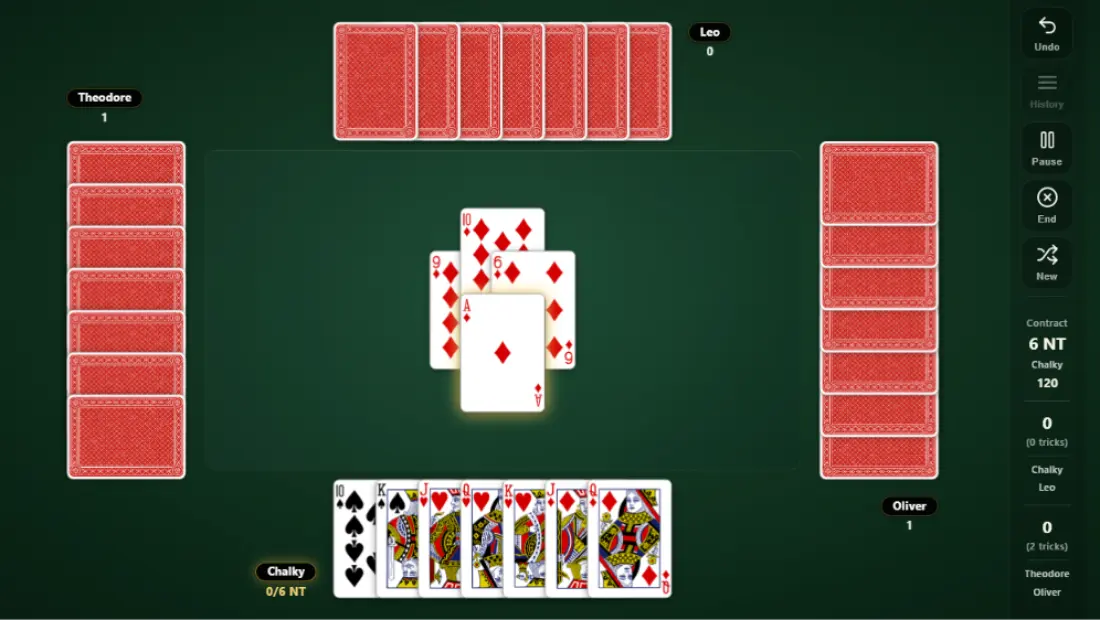

500 scoring looks dense until you treat each bid as a priced stake. The winning side names a trick target and a trump (or No-Trump). Make that contract, and the published value adds to your total. Fall short and the same number comes off.
This guide explains the Australian-style scoring system used in Solitaire Arcade’s version of 500. Other groups may use slightly different values or winning conditions, but the basic scoring works the same way.
Bidding and scoring table
Partnership 500 prices every ordinary contract on two axes: how many of the ten tricks you promise, and which trump (or No-Trump) you name. At the same trick level, suits climb Spades → Clubs → Diamonds → Hearts → No-Trump. Every seven-level bid outranks every six-level bid, and so on up the ladder.
Tricks Spades Clubs Diamonds Hearts No-Trump
6 40 60 80 100 120
7 140 160 180 200 220
8 240 260 280 300 320
9 340 360 380 400 420
10 440 460 480 500 520
Special contracts sit beside that grid: Misère 250, Open Misère 500.
When the contract succeeds
Win at least as many tricks as you bid, and your side scores the published table value. Bid 6 Hearts and take six: +100. Bid 8 Diamonds and take eight: +280. Ordinary overtricks add nothing: bid 8 Hearts, take nine, and you still bank +300.
For a bigger ordinary score, you generally have to bid a higher contract. Spare tricks short of a clean sweep are insurance, not a second payday.
Slam / all-tricks bonus
There is one clean-sweep exception. Make a non-Misère contract worth less than 250 and take all ten tricks, and you score 250 instead of the table cell. Bid 6 Hearts and take ten: +250. Bid 8 Spades (240) and take ten: also +250. Bid 8 Hearts (300) and take ten: still +300, because that contract already sits at or above the floor. Bid 9 No-Trump (420) and take ten: still +420 for the same reason.
Misère and Open Misère stay on their own 250/500 line and do not use this slam rule.
When the contract fails
One trick short is still a set. The contracting side loses the published value of the bid. Miss 7 Clubs and you are −160. Miss 8 Hearts and you are −300. Miss 10 No-Trump and you are −520. The same ladder that can finish a game in one hand can also wipe several quieter deals.
How defenders score
Defenders score 10 points for each trick they win. If the contractors bid 8 Diamonds and take exactly eight, the defenders took two tricks: contractors +280, defenders +20. If the defenders set the contract, the contractors still lose the bid value, and the defending side still collects 10 per trick won.
Misère and Open Misère
Misère flips the usual goal. The bidder tries to take no tricks. Succeed for +250; take even one trick and lose 250.
Open Misère is the same zero-trick promise with the bidder’s hand exposed after the first trick. It pays 500 on success and costs 500 on failure. These bids are not suit-ladder cells. They exist so a low, slippery hand can still own the auction and move the board a long way in one deal.
Winning at +500, losing at −500
First side to reach +500 wins. A side that falls to −500 loses.
Under this Australian-style finish, crossing 500 on defender trick points alone is not enough. A team must make a contract to win. Defender points cap at 490 so defense cannot walk a side over the line by itself. Near either edge, a modest makeable bid often beats a flashy gamble.
Worked examples
Made suit contract. North/South buy 8 Hearts (300) and take eight tricks. East/West took two. Contractors +300, defenders +20. Taking nine or all ten on this hand still pays +300: ordinary overtricks do not stack, and 8 Hearts already sits above the 250 slam floor.
Slam floor. North/South buy 6 Hearts (100) and take all ten tricks. Contractors score +250, not +100. Contrast that with 8 Hearts take ten: still +300 (table value only). Bid 8 and take 9: still the bid cell either way.
Set contract. Same 8 Hearts auction, but North/South manage only seven tricks. Contractors −300. East/West took three tricks, so defenders +30.
Misère swing. A side sitting on 280 calls Misère and ducks every trick: +250, total 530, and the game ends because the contract was made. If that same seat takes one accidental trick instead, the side is −250 and drops to 30.
Sitting on 420 and stretching for 8 Diamonds (280) is the same kind of pressure in suit play. Make it and you clear 500. Take only seven and you fall to 140.
You can try this scoring system in Solitaire Arcade’s version of 500, which follows the Australian-style rules explained above.
By subscribing, you accepted the our Privacy Policy